




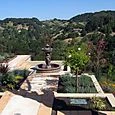
If you live in lush, humid state where it rains year round and upgrading your irrigation system means buying a second hose, you can stop reading right now. But if you live in the Southwest, then this post’s for you.
A few weeks ago I replaced my traditional irrigation timer with a Torro Intellisense ET controller (and for all you clients reading this wondering how I have been recommending them so enthusiastically without purchasing one myself, mea culpa). Also called Smart Controllers, ET stands for evapo-transpiration rate; in other words, the rate at which a plant loses moisture at the soil surface (evaporation) and through its leaf surfaces (transpiration). Irrigating your plants when they have used up the available moisture is the most efficient way to water, and now, thanks to the miracle of science, your timer can figure this out for you.
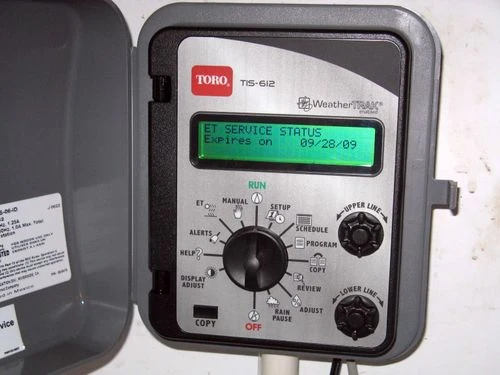
Way more techy than my old controller
In essence, the controller relies on current weather conditions and combines this information with what you have entered in its program regarding the soil type, amount of sun/shade, slope and the water requirements of your plants, i.e. low, average, or high. It is then able to determine when and how long to turn your sprinklers on. In my case, the weather data is triangulated from high-powered weather stations, but you have the option of using sensors on site or even installing your own min-weather station – more on the pros and cons of each option in a later post. (Confession – I don’t actually know what triangulate means, so that part might not be true. But it does send weather data.)
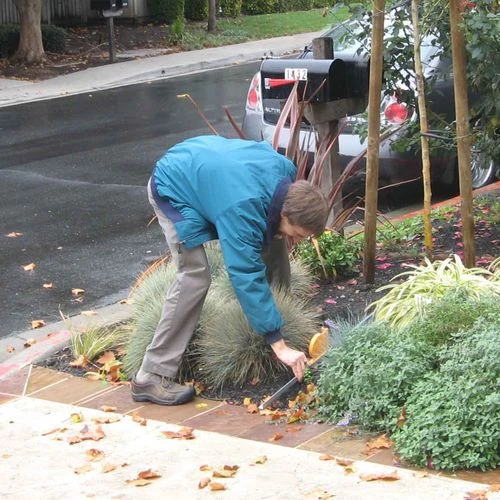
Bob Eagle works his irrigation auditing magic
Programming the controller is a little daunting. Fortunately, my water provider, Contra Costa Water District, is strongly encouraging residents to upgrade to an ET controller. Not only are they offering rebates, but they sent Bob Eagle, water conservation specialist extraordinaire, to perform a water audit on my landscape and show me how to program the timer. My garden is so tiny and I have already eliminated my lawn, so I doubt I’ll see the same savings on my water bill as someone with a lot of real estate or a large lawn, but I am lazy about adjusting my controller and can overwater with the best of them. If you have a lawn, switching to an ET controller can reduce the portion of your water bill that goes towards landscape irrigation by 40%.
I learned so much from Bob that I am planning some follow up posts. Just to pique your interest, here is a multiple choice question whose answer will surprise you:
Which of the following is NOT taken into consideration by a Toro ET controller in setting an irrigation schedule?
- Rain
- Wind
- Solar Radiation
- Temperature
- Humidity
Bet you had no idea timers and water audits could be so exciting!
The answer is A. Crazy, huh?




Comments